

How to find entry-level jobs in Timor-Leste
Turn study, projects and other real experience into evidence for a suitable first job.
How do I follow these steps on screen?
Follow the numbered steps below. Screenshots were captured on 20 November 2026; page details may change. Your device automatically receives the matching mobile, tablet or desktop capture. Select an image to enlarge it.
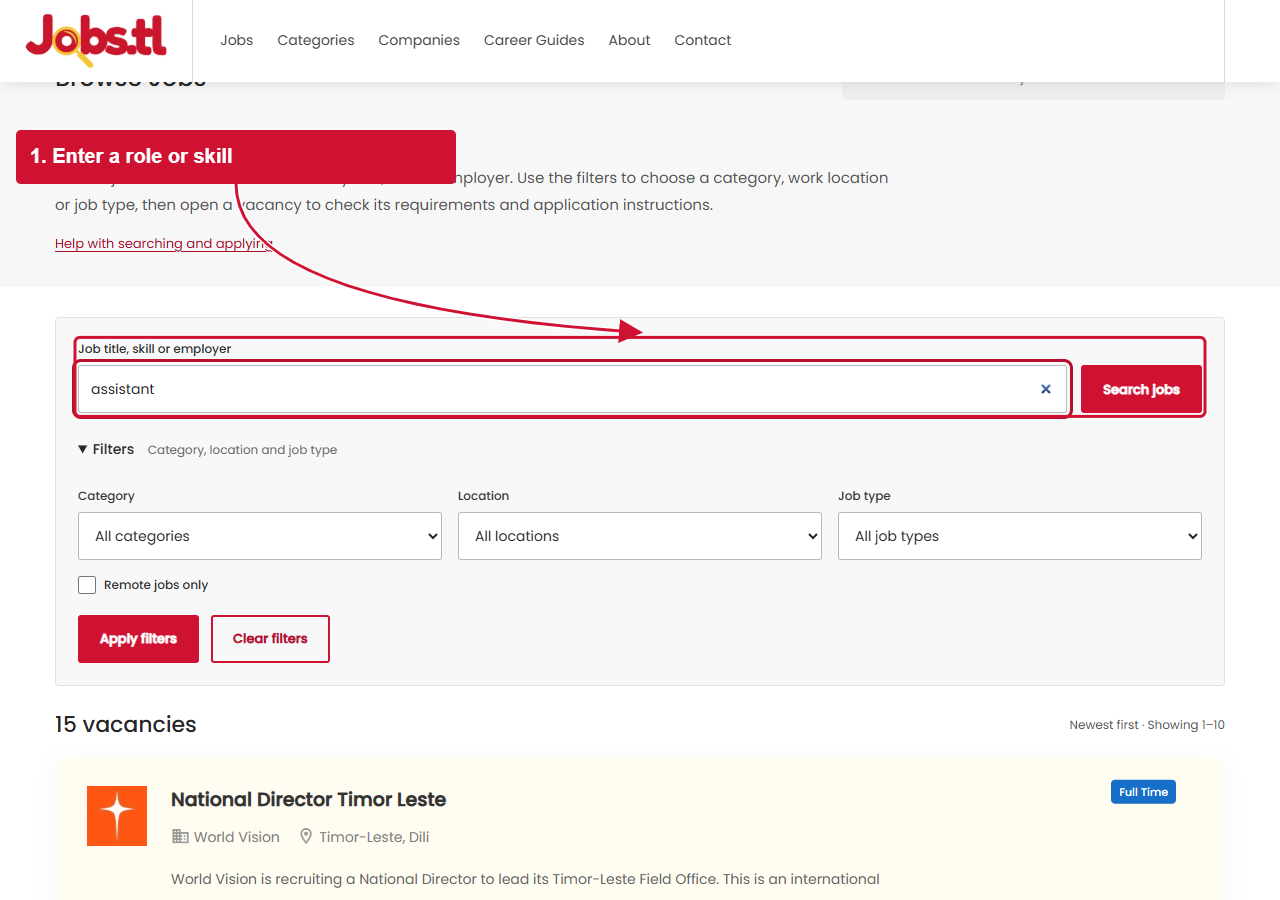
1Search for a role or skill
Open Browse Jobs, enter a relevant term such as assistant, and press Search jobs. A search term is a starting point, not proof that a role is entry-level.
2Broaden a search with no results
Our example search returned no matching vacancies on 20 November 2026. Select Browse all jobs to try another term or explore the full list. Results will change as jobs are added or expire.

3Explore the available filters
Select Filters to choose a category, location or job type. Then use Apply filters. Open a suitable vacancy and check its essential requirements before applying.

Where can I find jobs with no experience in Timor-Leste?
Search current vacancies for entry-level, junior, assistant, trainee or internship terms that match your interests. These titles are search clues, not guarantees that experience is unnecessary. Read the essential requirements carefully. Use Browse Jobs and compare related categories rather than searching only for one exact phrase.

How do I know whether an entry-level vacancy is suitable?
Separate essential requirements from preferences. Check education, language, software, location and availability as well as the requested work experience. If the notice accepts equivalent experience, explain your relevant evidence. If a requirement is unclear, ask the employer instead of assuming that every junior role will accept a first-time applicant.
What can I put on my CV without paid work experience?
Use education, supervised placements, volunteering, personal projects and responsibilities that are relevant to the role. Label each accurately. For a study project, state the objective, your contribution and what you produced. Do not turn a classroom exercise into paid employment or invent clients, job titles or results.
How can I write a useful first-job example?
Start with a specific task, explain your action and describe the outcome you can support. For example, a fictional student might describe organising a group presentation and maintaining its task checklist. Your own CV should use an example that actually happened. Numbers help only when you know what they measure and can explain them.
Should I apply for an internship or volunteer role?
Read the terms before deciding. Confirm the duties, supervision, hours, duration and whether payment or expenses are provided. Do not assume an internship is paid or leads to a permanent job. Consider whether the arrangement fits your needs and provides relevant learning, while continuing to look for suitable employment.
How do I keep a first-job search manageable?
Choose a small number of suitable vacancies and record each deadline and application route. Tailor your evidence to the requirements, check the files and submit as instructed. Keep confirmation and follow up only where appropriate. Our CV guidance explains how to present truthful experience clearly.
Useful pages for your next step
Your next step
Find a role that fits.
Compare current vacancies and follow the employer’s application instructions.
